Bursary guide
How to Keep Students Who Might Drop Out Over Fees
Many students who leave over money could have stayed with the right plan at the right time. The key is to see the risk early and act on it.
Why fee-related dropout is preventable
Students leave university for many reasons. Money is one of the most common, and one of the most preventable. A family's income falls. A sponsor pays late. An unexpected cost arrives. The balance grows, and the student stops attending before anyone notices.
Often the student does not ask for help. They may feel ashamed, or not know that help exists, or believe it is too late. By the time the bursary contacts them, they have already decided to leave.
The answer is to make the situation visible early, to both the student and the university, and to have clear options ready. This guide sets out how, using Advance and Wallet as examples.
The same principles apply whatever tools a university uses: clarity, early warning, flexible plans, fair support and follow-up.
Step 1: make the balance clear
Students cannot manage what they cannot see. Every student, and every guardian or sponsor who pays for them, should be able to check the balance at any time, without queuing. They should see what is owed, when and what it covers.
Wallet shows the balance, due dates, payments made and receipts on a phone. Guardians and sponsors get their own access. A student whose sponsor has paid part of the fee can see what remains.
Clarity alone helps. Many students fall behind because they did not know a payment was due, not because they could not pay.
Explain charges in plain language too. A line that says what a fee is for, and when it must be paid, prevents many queries and disputes. Students who understand their fees are more likely to plan for them.
Step 2: offer payment plans by default
A large lump sum at the start of the year is the hardest payment for many families. Payment plans spread the cost into instalments that match how families earn and save.
Offer plans to every student, not only to those who ask. Bursary staff set up a plan in seconds, and students see each instalment in Wallet. Every Monday, reminders go out for any overdue balance. Payments can be made by card through Paystack, bank transfer, cash or mobile money.
- Offer plans to all students at the start of the year
- Match instalments to when families are paid
- Remind families as soon as an instalment is overdue
- Make it easy to pay in small amounts
Think about the timing of instalments. If many families are paid monthly, monthly instalments work better than a few large payments. If income is seasonal, as it is for many farming families, plans can follow the harvest.
Step 3: spot risk early
Some patterns suggest a student is struggling: a missed instalment, a balance that keeps growing, a sponsor payment that has not arrived. Each alone may mean little. Together, they are a warning.
Advance looks for these patterns and matches students at risk with support they may be eligible for, such as a scholarship, a hardship fund or a revised plan. The matching is Ai enabled and explains its reasons, so staff can judge whether they agree.
Advance never makes an award or blocks a student on its own. It brings the case to a person, early enough to help.
Look at patterns across groups as well as individuals. If many students from one programme or one sponsor fall behind at the same time, there may be a shared cause, such as a delayed sponsor payment, that the university can fix with one conversation.
Step 4: make support easy to ask for
Hardship funds only help if students apply. Make the application short, private and available on a phone. In Wallet, students apply for scholarships and hardship support with a short statement and track the decision.
Reach out too. When Advance flags a risk, a member of bursary staff can contact the student with a specific offer: a new plan, a hardship application, a short meeting. A specific offer is more likely to get a response than a general warning.
Every award is decided by a person and recorded with reasons. That keeps support fair and auditable.
Link support to other help too. A student under financial pressure may also be struggling with their studies. A tutor or mentor can help alongside a payment plan, and the earlier both are offered, the better the chance the student stays.
Step 5: track and learn
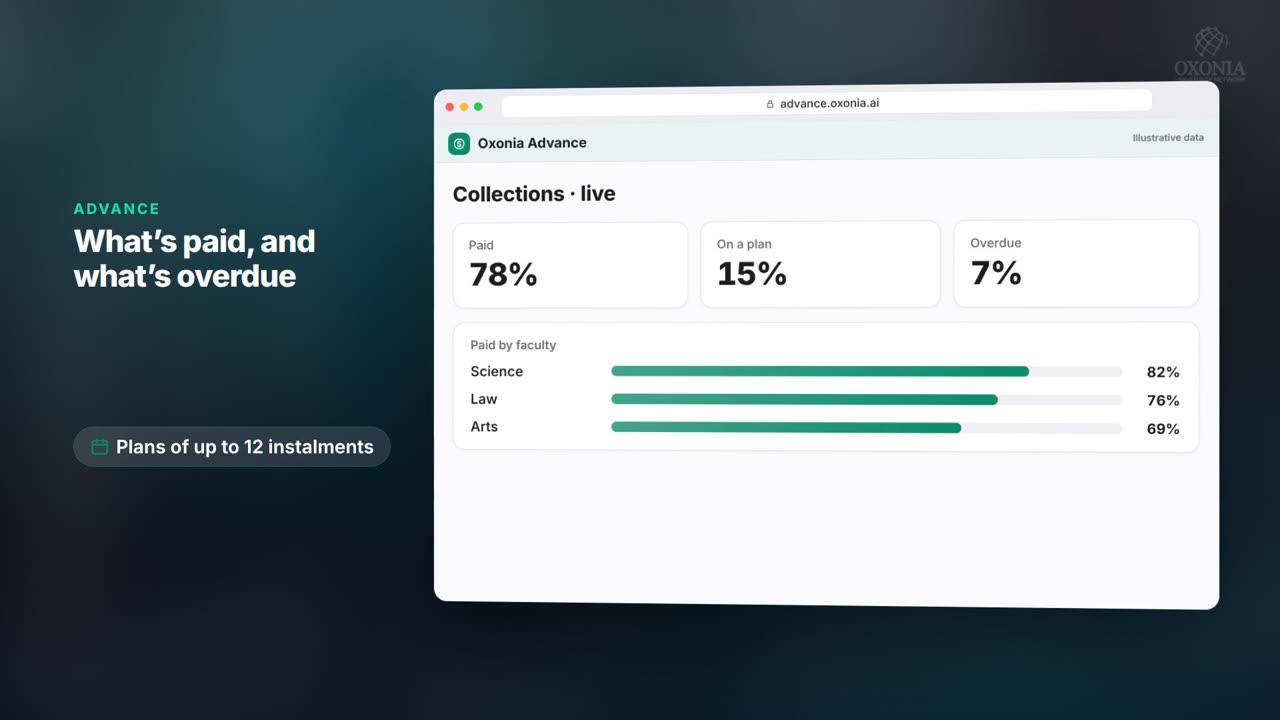
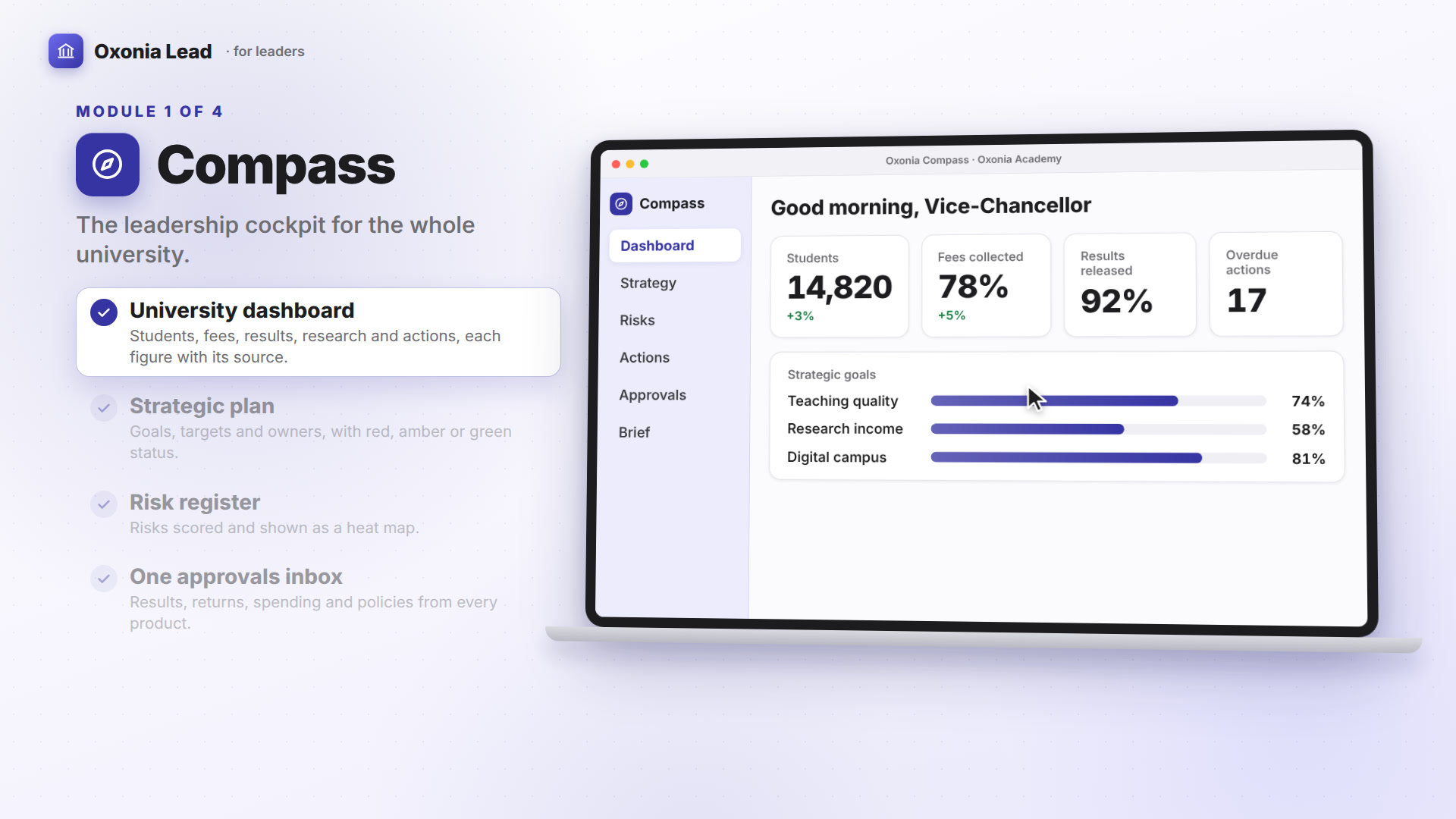
Leaders should see the picture: how much has been collected, how many students are on plans, how many are at risk and how many were helped. In Compass, these figures appear on the leadership dashboard and can be linked to a retention goal in the strategic plan.
Review each term. Which plans worked best? Which kinds of support kept students enrolled? Where did the university act too late? Use the answers to adjust next year's plans and funds.
Alumni can help as well. Advance records fundraising campaigns and gifts, and the money raised can fund the scholarships that current students apply for.
| Step | Tool | Who acts |
|---|---|---|
| Make the balance clear | Wallet | Students, guardians, sponsors |
| Offer payment plans | Wallet and Advance | Bursary |
| Spot risk early | Advance retention matching | Bursary staff |
| Make support easy to ask for | Wallet applications | Students and bursary |
| Track and learn | Compass | Leaders |
Getting started
Advance costs £16,000 a year for up to 5,000 students, £25,000 for 5,000 to 15,000 and £36,000 for 15,000 to 40,000, and includes Wallet. Universities in Nigeria pay 35% of the UK price, billed in naira.
Advance is part of Oxonia Operate. See pricing, or read about digital universities in Nigeria and Africa.
Most bursaries start by switching on Wallet and payment plans for new students, then add retention matching once there is a term of payment history to work from.
Products in this article
Questions people ask
How can universities reduce dropout over fees?
Make balances clear, offer payment plans to all, spot risk early, make hardship support easy to request and track results each term.
Does Advance decide hardship awards automatically?
No. Advance matches students at risk with support and explains why, but a person decides every award.
Can students apply for hardship support on their phone?
Yes. Students apply in Wallet with a short statement and track the decision.
Leaflets


More videos
 1:11Conference film · Chapter 5Operate: records, Advance and Wallet
 1:40Suite filmOxonia Lead in 100 seconds
 1:54Conference film · Chapter 4Lead: Senate, Compass, Office, Policy, Library
Keep reading
Related articles
Oxonia Operate →
For the Registry, Admissions, Finance, Student Services and departmental administrators: meetings, approvals and memos automated, applications screened against your criteria, and answers for students and staff at any hour.