Wallet for students
Student Fees App: Balances, Payment Plans and Receipts
Paying fees should not mean queues at the bursary. Wallet puts the balance, the plan and the receipt on a student's phone.
The fees queue problem
In many universities, paying fees is slow and stressful. Students queue at the bursary to ask their balance. Parents send money by transfer and then send a photo of the slip. Sponsors pay for several students and cannot see who is covered. Receipts are printed, lost and printed again.
Students who fall behind often do not know where they stand until they are blocked from an exam. By then, it is too late to agree a plan. Some leave rather than ask for help.
Wallet is the student-facing app for fees. It shows the balance, takes payments, runs payment plans and handles scholarship and hardship applications. Bursary staff manage it all in Advance.
The bursary feels this too. Staff spend their days answering balance questions, matching transfers to the right student and reissuing receipts. Little time is left for the students who really need help to find a way to pay.
What students, guardians and sponsors see
Each user signs in with an Oxonia Academy ID. Students see their own account. Guardians see the accounts they are linked to. Sponsors, such as a company or a government scheme, see the students they fund.
- Current fees balance and what it covers
- Due dates and payment plan instalments
- Payment history with receipts to download
- Scholarships and awards applied to the account
- Status of any hardship application
The app uses plain language. A student can see what is owed, when, and what happens if a payment is late.
Students who are sponsored can see what the sponsor has paid and what remains their own responsibility. That removes a common source of confusion at the start of each year, when sponsor payments often arrive late and students are unsure whether they are covered.
Paying by card, Paystack or transfer
Wallet supports payment by card through the university's own Paystack account. Card payments update the balance, and the receipt is issued straight away and emailed. Payers can also record a bank transfer, cash or mobile money payment, which the Bursar confirms before the receipt is issued.
For transfers, Wallet shows the university's bank details and asks the payer for the transaction reference, so the bursary can match the payment without chasing. Guardians abroad can pay without travelling. A sponsor linked to several students sees each of their accounts.
Every receipt is stored in the student's account. If a student needs proof of payment for a visa, a scholarship or a hall of residence, they can download it.
Bursary staff can see every payment as it arrives. Payments waiting to be confirmed are shown in a short list so they can be resolved quickly. The aim is that a student never has to bring a paper slip to prove they paid.
| Method | Who uses it |
|---|---|
| Card | Students and guardians |
| Paystack | Students and guardians, especially in Nigeria |
| Bank transfer | Guardians and sponsors |
| Invoice or purchase order | Sponsors and organisations |
Payment plans and hardship support
Not every family can pay in one go. Bursary staff can set up a payment plan for a student, and Wallet shows each instalment and its due date.
Students can also apply for scholarships and hardship support through Wallet. They write a short statement, can add their household income, and track the decision. Bursary staff review applications in Advance and record the outcome. A person decides every award.
This matters for retention. A student who can see a way through is more likely to stay. Our article on keeping students who might leave over fees explains how Advance spots risk early.
If a payment is missed, a weekly email reminder goes to the student, guardians and sponsors with a clear message about what to do next and who to talk to. The tone is helpful rather than threatening, because the aim is to keep the student enrolled and paying, not to push them away.
What the bursary gains
Fewer queues and fewer emails asking for balances. Payments that match their references. A single list of payment plans and who is behind. Hardship applications in one place, each with the student's statement.
Advance gives bursary staff the tools behind Wallet: fees, payment plans, receipts, scholarships and hardship, and retention risk matching. Finance leaders who use Compass can see fee collection on the leadership dashboard.
Advance also matches students at risk of leaving over fees with support they may be eligible for. Bursary staff see the match and decide what to offer. Nothing is awarded automatically.
Languages and local payment
Wallet is available in English, French, Portuguese, Arabic, Hausa, Yoruba, Igbo, Nigerian Pidgin and more, and each person chooses their own language. It supports Paystack alongside card and transfer, which suits universities in Nigeria and across West Africa. Read more in our article on digital universities in Nigeria and Africa.
Wallet also works well on a basic smartphone, which matters where many students do not have a laptop. Students can check their balance, pay and download receipts without visiting the campus at all. Guardians living in another city or another country can do the same.
How to get Wallet
Wallet comes with Advance. Advance costs £16,000 a year for up to 5,000 students, £25,000 for 5,000 to 15,000 and £36,000 for 15,000 to 40,000. It is part of Oxonia Operate, and students reach Wallet through Oxonia Learn.
Universities in Nigeria pay 35% of the UK price, billed in naira. See pricing for package savings and Department plans.
A common first step is to switch on Wallet for new students at the start of an academic year. They learn to check and pay fees in the app from day one, and the bursary moves returning students across once the process is settled. Bursary staff should be part of the work from the start, because they know where the current process breaks.
Products in this article
Questions people ask
Can parents and sponsors pay fees in Wallet?
Yes. Guardians and sponsors sign in with their own Oxonia Academy ID and can see and pay for the students they support.
Which payment methods does Wallet support?
Card payments through the university's Paystack account, plus bank transfer, cash and mobile money payments that the Bursar confirms.
Can students apply for hardship support in Wallet?
Yes. Students apply for scholarships and hardship support in Wallet, and bursary staff decide in Advance.
How much does Wallet cost?
Wallet comes with Advance, which costs £16,000 a year for up to 5,000 students.
Leaflets


More videos
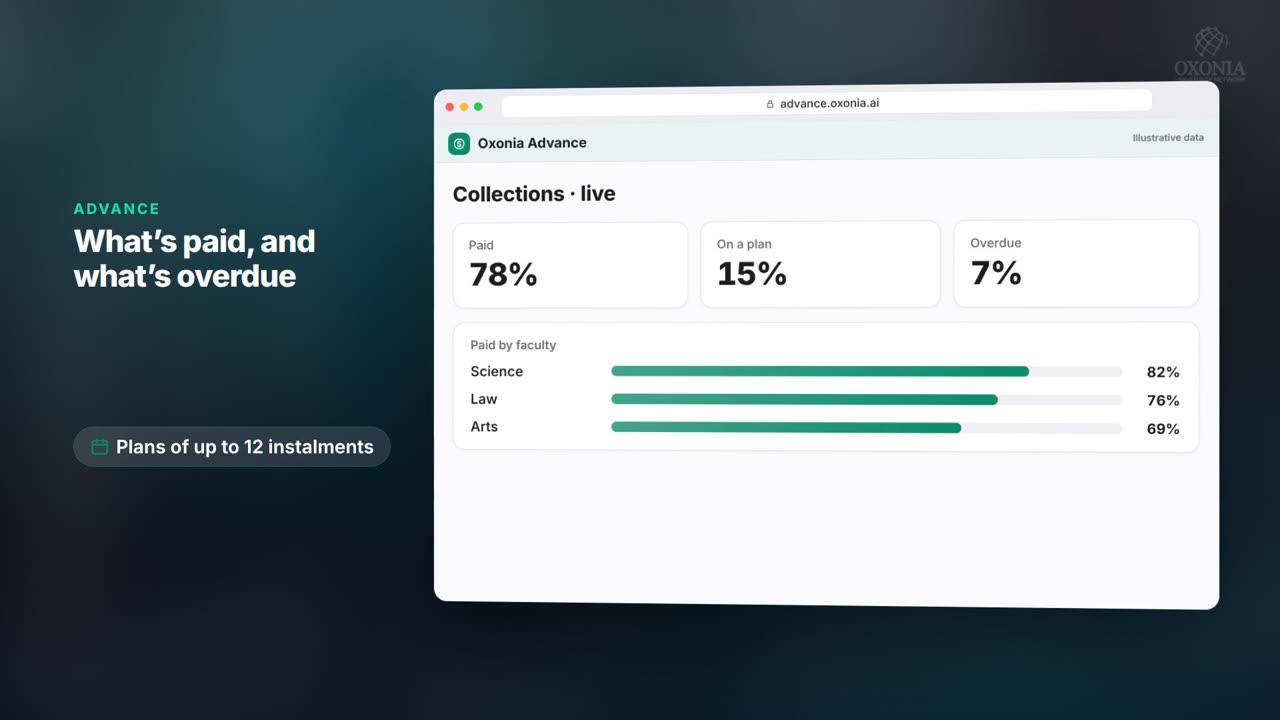 1:11Conference film · Chapter 5Operate: records, Advance and Wallet
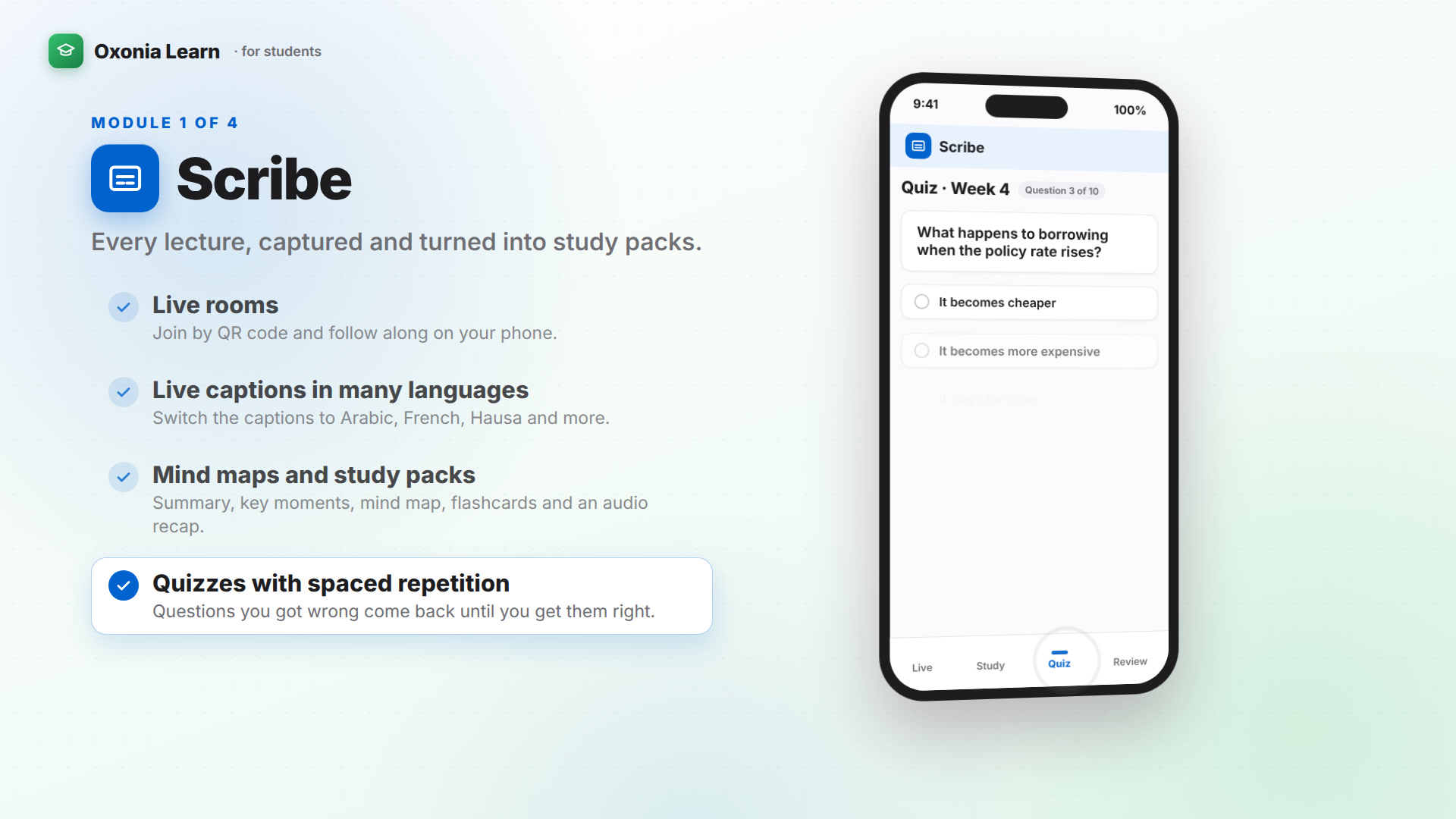 1:36Suite filmOxonia Learn in 100 seconds
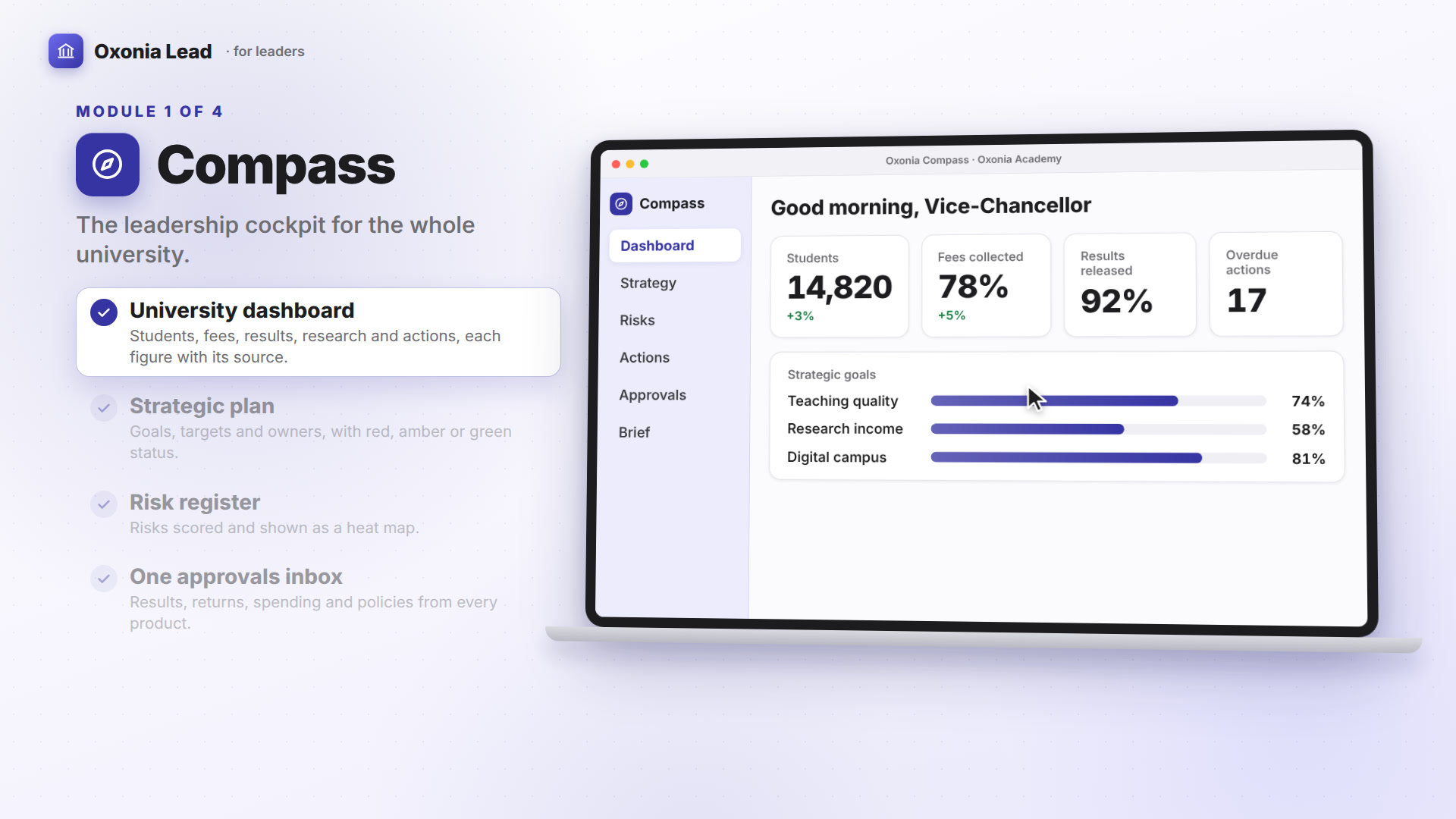 1:40Suite filmOxonia Lead in 100 seconds
Keep reading
Related articles
Oxonia Learn →
For undergraduate, postgraduate, international and doctoral students: a personal Ai tutor at any hour, every lecture in your own language, self-assessment that finds your weak spots, exam preparation with past papers, and help with research and academic writing. Career and wellbeing support are coming next.