Scribe for research degrees
Recording Vivas with Consent: A Fair Record for Candidates and Examiners
A viva decides years of work in a few hours. A fair, private record of what was asked and what was agreed protects the candidate and the examiners alike.
Why record a viva at all
The oral examination of a thesis is one of the most important conversations in a researcher's life, and one of the least well recorded. Notes are taken by an examiner who is also asking questions. Months later the candidate is working on corrections and nobody is quite sure what was asked for. If there is a dispute, everyone remembers the conversation differently.
A recording, and a careful written record made from it, solves much of this. But a viva is also private and sensitive. It must never be recorded without agreement, and the recording must never end up anywhere it should not.
Oxonia Scribe, part of Oxonia Teach, has a session type made for vivas, with consent and privacy built in.
Consent first, every time
To record a viva, the person setting it up enters the candidate and the examiners, at least one and up to six, and optionally up to four supervisors. Before recording can start, the candidate must confirm they agree to the viva being recorded, and so must every examiner. If anyone has not agreed, Scribe will not record.
The words agreed to are saved as consent evidence: that the candidate and the named examiners agreed to the viva being recorded, before recording started, with the time. Scribe keeps consent records for every recording, so the university can show who confirmed consent, when, for which session and in what words.
This turns a good intention into a step that cannot be skipped by accident.
Who can open the recording
A viva recording is private to the candidate, their supervisors and the examiners. It is never shared with a class and never released to students. The person who records it can go further and keep it to the examiners only, and can change that later; every change is written to the audit log.
People are matched to the recording by email. An account counts only once its owner has confirmed the address, and anyone who signs in later with a matching confirmed address gets access then. Vivas are filed in a research folder, or left unfiled, never in a teaching folder.
Only the person who recorded the viva sees the full list of participants and their email addresses. Everyone else sees the candidate's and examiners' names.
What the viva record contains
After the viva, Scribe writes a record for the candidate, supervisors and examiners. It is neutral and factual, about the thesis and the discussion, and it never guesses at the outcome.
- Questions: every substantive question the examiners asked, in order, with its time in the recording, who asked it, and the candidate's answer summarised in one to three sentences.
- Follow-ups: every correction, clarification, piece of further work or minor amendment the examiners raised, with its time.
- Strengths: strengths of the thesis or the defence that the examiners actually stated, and nothing if none were stated.
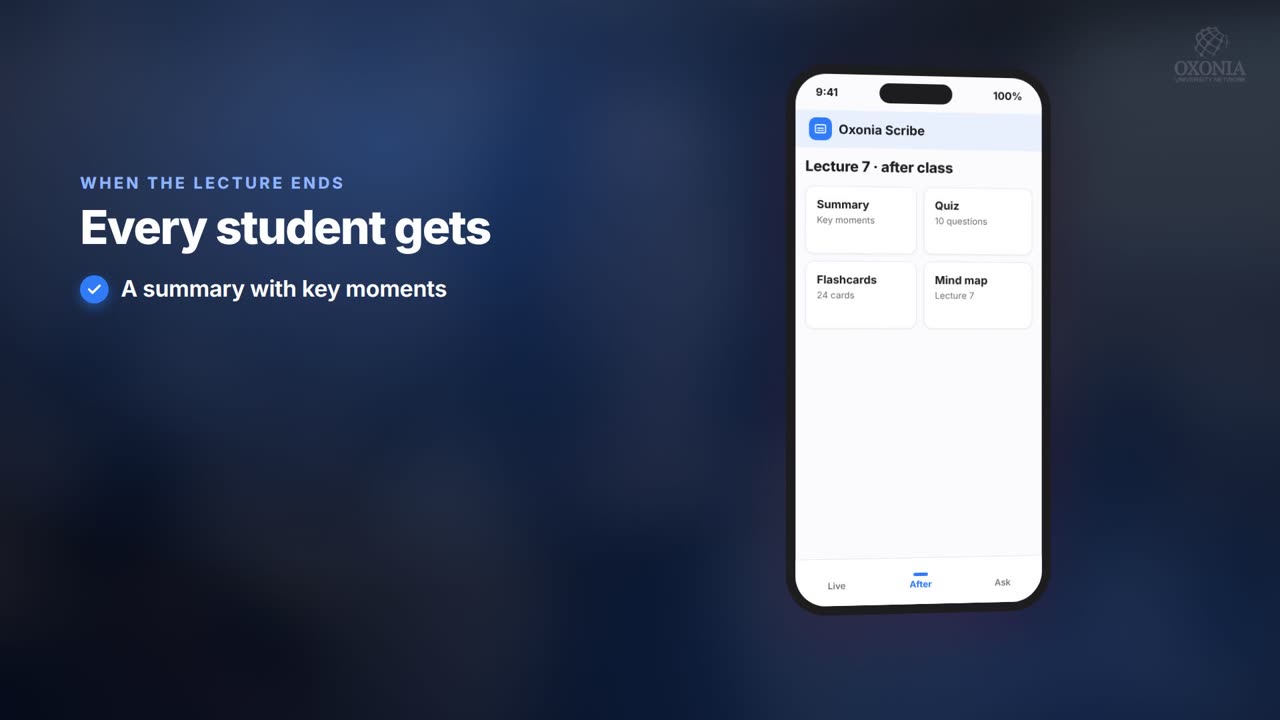
The record also carries a summary and key moments. It leaves out what makes no sense for a viva: no quiz, no flashcards, no practice exam questions and no charts.
Because every question carries its time, an examiner checking the record can jump straight to that moment in the recording. If the summary of an answer seems unfair, the original is a click away. The record is a guide to the recording, not a replacement for it.
| Included | Left out |
|---|---|
| Summary and key moments | Quiz |
| Every substantive question, with its time and who asked | Flashcards |
| The candidate's answers, in one to three sentences | Practice exam questions |
| Corrections and follow-ups, with their time | Charts and tables |
| Strengths the examiners stated | Any guess at the outcome |
From the viva to corrections
Corrections set in the viva are listed as actions, with the candidate responsible for corrections and the examiners for anything they agreed to do. Each follow-up carries its time in the recording, so a candidate who is unsure what an examiner meant can listen to that moment again.
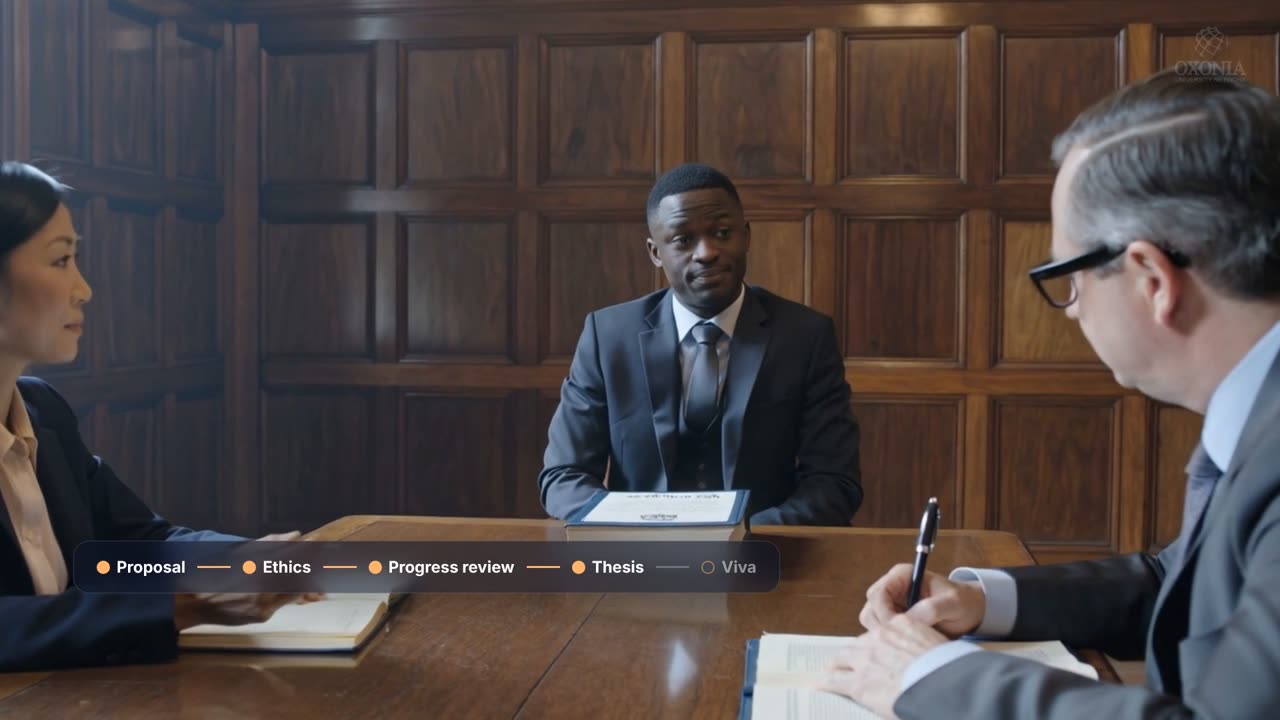
In Oxonia Research, the research office follows each doctoral candidate through their milestones, from proposal defence and upgrade to submission and viva. The viva record gives the office and the supervisors a shared understanding of what comes next.
For examiners, the record is a check on their own notes. For the candidate, it is a fair account of a stressful day.
Data protection and good practice
The university is the data controller for its recordings and decides how long they are kept. Oxonia processes them only to provide the service. See security and data protection at Oxonia.
A few habits make recorded vivas work well:
- Tell the candidate in advance that the viva may be recorded, and that they can say no.
- Agree who will see the recording, and use examiners only where the regulations require it.
- Ask the chair or the internal examiner to set up the session, not the candidate.
- Check the follow-ups list against the examiners' own report before it is sent.
Each viva recording, and each change to who may see it, is written to the audit log. If a candidate or examiner later asks who could open the recording and when that changed, the university can answer precisely.
Getting started
Vivas are a session type in Scribe, so any university that uses Scribe can record them under its own regulations. A good start is to agree a short policy with the graduate school, try it with a few willing candidates and examiners, and review the records together.
The same consent and privacy rules sit behind every Scribe recording, from lectures to one-to-one tutorials. Read more about research support in Oxonia Discover.
Graduate schools sometimes worry that recording will change how examiners behave. In practice the opposite concern is more common: candidates want reassurance that what was agreed will be remembered accurately. A short pilot, with the record checked by both examiners, is the best way to find out what works under your own regulations.
Products in this article
Questions people ask
Can a viva be recorded without the candidate's agreement?
No. The candidate and every examiner must agree before recording starts, and the agreement is saved as consent evidence.
Who can watch a recorded viva?
The candidate, supervisors and examiners, or the examiners only. It is never shared with a class or released to students.
Does the record say whether the candidate passed?
No. The record is neutral and never guesses at the outcome.
Are corrections listed?
Yes. Every correction or follow-up the examiners raised is listed with its time in the recording.
Leaflets


More videos
 1:19Conference film · Chapter 6Teach: Scribe and Tutor
 2:07Suite filmOxonia Discover in two minutes
 0:56Conference film · Chapter 8Discover: Research and Nexus
Keep reading