Nexus for quality teams
Accreditation Readiness and Regulator Returns, Done Right
Accreditation visits and regulator returns should not mean a month of panic. Nexus keeps the evidence ready all year.
Why accreditation is so stressful
Universities answer to regulators and professional bodies. They submit returns, write self-studies and host panel visits. Each one asks for evidence: staff qualifications, programme documents, student numbers, outcomes and governance records.
In many universities, that evidence is scattered. Staff records sit in HR files that are out of date. Programme documents live in faculty folders. Figures are pulled together by hand each time. When a panel is due, staff work late for weeks to find and check everything.
Mistakes are costly. A wrong figure in a return, or a staff member listed with a qualification that cannot be verified, can damage a university's standing.
Nexus is the product in Oxonia Lead that keeps this evidence ready. It also appears in Oxonia Operate for registry and HR staff who keep records up to date.
The problem is not effort. Quality teams work very hard. The problem is that the same evidence is gathered again and again for each return, each visit and each self-study, instead of being kept ready in one place. Nexus changes that by making records the starting point rather than the final scramble.
Verified staff records
Nexus holds a record for each member of staff: qualifications, appointments, teaching load, research and professional standing. Records are verified. Staff upload evidence, such as a degree certificate, and a named person checks it before it counts.
Verification matters because regulators ask about staff qualifications. A verified record means the university can answer with confidence. Each record shows who verified what and when.
Staff can see and update their own records. HR and registry staff manage the verification queue. Publications from Research can feed the research side of staff records.
Over time, the staff record becomes the single source of truth for every return and visit that needs it.
Staff often find this easier than the old process. They upload a certificate once rather than sending copies for every return. When they gain a new qualification or take on a new role, they update their record and it flows into the next return automatically.
Accreditation readiness and self-study
Nexus tracks readiness for each accreditation the university holds or seeks. It lists the standards, the evidence each one needs and whether that evidence is in place. Gaps show clearly, with owners and due dates.
When a self-study is due, Nexus helps assemble it. Drafts can be prepared from the evidence held, with each statement citing its source. Writers edit and approve the text. As always, Ai enabled drafts become official only when a person adopts them.
- Standards listed with the evidence each needs
- Gaps shown with owners and due dates
- Self-study drafts that cite their evidence
- Named approval before anything is submitted
Readiness is tracked all year, not only before a visit. Quality teams can review progress each term, chase gaps early and avoid the rush. Faculties can see their own readiness, so they know what they need to provide and by when.
Regulator returns, auto-filled and signed
Regulator returns ask for figures the university already holds: staff numbers, qualifications, students and more. Nexus fills the return from verified records. Staff check each figure, with a link to the records behind it.
When the return is ready, it goes to the vice-chancellor to sign. The signed return is stored with its supporting data. Next year, staff can see exactly what was submitted and why.
Auto-filling does not remove the need for checking. It removes the copying, which is where many errors start.
Returns also become easier to compare from year to year. If a figure changes sharply, staff can see why: new staff joined, a programme closed or a definition changed. That helps the university answer questions from the regulator quickly and accurately.
Panel visits
Before a panel visit, Nexus brings together the documents the panel has asked for. It tracks the visit schedule, the people the panel will meet and the questions raised. After the visit, findings and actions are recorded and tracked to completion.
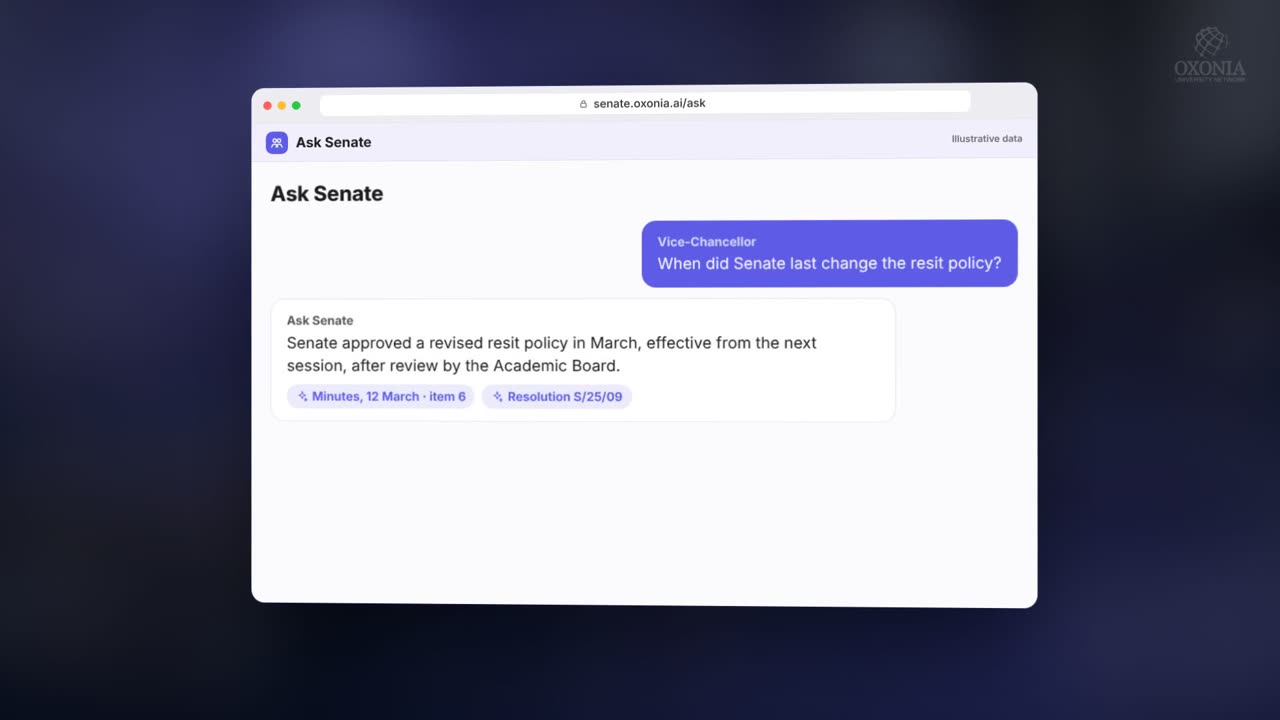
Governance records from Senate are often part of the evidence. Minutes, resolutions and actions are already in order, so they can be shared quickly. Panels can see how decisions are made, not just what they were.
Panel members want to see that the university knows itself. A well-organised evidence base, with clear owners and current records, makes a good impression before the first question is asked.
How Nexus links to leadership
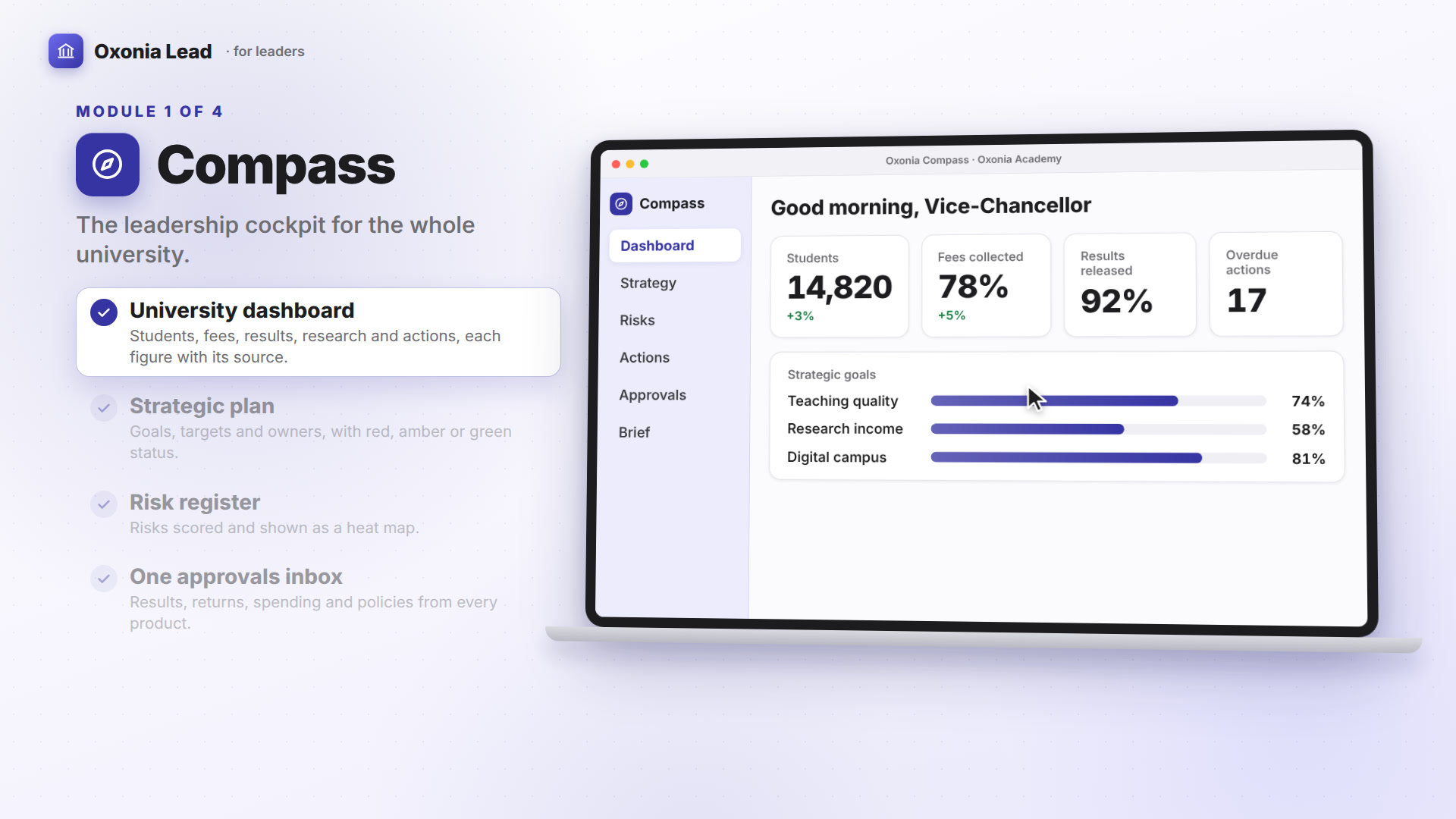
Accreditation status and open findings can appear in Compass, the leadership dashboard. A lapsing accreditation can be added to the risk register. Leaders see the state of readiness without asking for a report.
The Registrar and quality team keep day-to-day control. Leaders see what they need to make decisions and sign returns.
Deans can see readiness for the programmes in their faculty. That helps them plan resources well ahead of a visit, rather than finding gaps a few weeks before it.
Price
Nexus costs £8,000 a year for up to 5,000 students, £12,000 for 5,000 to 15,000 and £16,000 for 15,000 to 40,000. It is part of Oxonia Lead, which costs £52,000 a year for a mid-size university, and its records tools come with Oxonia Operate.
See pricing for packages, the 3-year discount and Department plans.
Most quality teams start by verifying staff records for one faculty, then add the accreditation standards for its next visit. Once the process works there, the rest of the university follows.
| University size | Yearly price |
|---|---|
| Up to 5,000 students | £8,000 |
| 5,000 to 15,000 students | £12,000 |
| 15,000 to 40,000 students | £16,000 |
| Over 40,000 students | By quote |
Products in this article
Questions people ask
How does Nexus help with accreditation?
Nexus lists each standard, the evidence it needs and any gaps, helps assemble self-studies and prepares for panel visits.
Can Nexus fill in regulator returns?
Yes. Nexus fills returns from verified records. Staff check each figure and the vice-chancellor signs the return.
What is a verified staff record?
A staff record where each qualification or claim has been checked against evidence by a named person.
How much does Nexus cost?
Nexus costs £8,000 a year for up to 5,000 students, £12,000 for 5,000 to 15,000 and £16,000 for 15,000 to 40,000.
Leaflets


More videos
 0:54Conference film · Chapter 9Time, money and income
 1:40Suite filmOxonia Lead in 100 seconds
 1:54Conference film · Chapter 4Lead: Senate, Compass, Office, Policy, Library
Keep reading
Related articles
Oxonia Lead →
For the Vice-Chancellor, Deputy VCs, Deans and Directors: a strategic plan built with the whole university and checked against the budget, policy and governance, a budget the Ai helps allocate, and benchmarking against peer universities.