Advance and Wallet for the bursary
Faster Fee Collection with Advance and Wallet
Most unpaid fees are not refusals. They are confusion, bad timing and a family who never saw the bill. Advance and Wallet fix the parts a bursary can control.
Why fees arrive late
In many universities the fee is paid by someone other than the student: a parent, an uncle, a sponsor, an employer or a scholarship body. The student sees the balance on a portal. The person paying sees nothing until the student forwards a screenshot. When the money finally arrives by bank transfer, the bursary matches it by hand and the receipt follows days later.
The result is familiar. Students are blocked from exams for balances that were actually paid. Families are chased for amounts they did not know about. The Bursar cannot tell the Vice-Chancellor how much has been collected this week without a day of reconciliation.
Oxonia Advance is the bursary's system in Oxonia Operate. Oxonia Wallet is the app students and families use to see and pay. Together they make the fee position clear to everyone who needs to see it.
One fee account, seen by everyone who pays
Each student has one fee account in Advance, holding the bills charged, the payments received and any payment plan. Accounts can be kept in naira, pounds, US dollars, Ghanaian cedis, Kenyan shillings or South African rand.
Guardians and sponsors can be linked to the student's account as Wallet members. They see the same balance, the same plan and the same receipts as the student, on their own phone. Nobody needs to forward screenshots, and the bursary is no longer the only place where the true balance lives.
Wallet installs on a phone from the browser, so families do not need to find an app in a store. Bursary staff work in Advance, with roles that separate everyday staff from administrators.
| Person | Where | What they can do |
|---|---|---|
| Student | Wallet | See balance, plan and receipts; pay by card or transfer |
| Guardian or sponsor | Wallet | See the same account; pay; receive reminders and receipts |
| Bursary staff | Advance | Bills, plans, reminders, confirm transfers |
| Bursar | Advance and Compass | Live collection view, risk list, payments to confirm |
Payment plans of up to twelve instalments
When a family cannot pay in one go, bursary staff can create a payment plan in seconds. Advance splits the balance into equal instalments, between one and twelve of them, starting on a chosen date and falling due monthly or every few months. Any rounding goes into the last instalment, so the plan always adds up to the balance exactly.
A new plan replaces any active one, so there is never confusion about which schedule applies. When the balance is cleared, the plan is marked completed by itself. Every plan is written to the audit log with the number of instalments and the total.
Plans help in two ways. Families who were going to pay late now pay on a schedule they agreed to. And the bursary can see, by instalment, who has missed a payment rather than waiting for the end of term.
Reminders that reach the right people
Advance sends fee reminders by email to the student and to every guardian and sponsor linked to the account. Bursary staff can send one at any time, with their own message or the university's standard wording, which fills in the student's name, number and the amount overdue.
Every Monday morning Advance also reminds everyone with an overdue balance, at most once a week per account. Nobody has to remember to send them, and nobody is reminded twice in the same week. Each reminder is recorded with how many people received it, so a complaint that nobody was told can be checked in seconds.
Because the reminder goes to the person who actually pays, not only to the student, it has a much better chance of being acted on.
Paying from a phone, with an instant receipt
In Wallet a student or family member can pay by card or by bank transfer. Card payments go through the university's own Paystack account, so the money goes straight to the university. When the payment is confirmed, Advance checks that the amount and currency match, issues the receipt number straight away and emails the receipt to the payer.
Bank transfers still work. The payer records the transfer, and the payment waits for the bursary to confirm it. For the Bursar, payments waiting to be confirmed also appear in the approvals inbox in Oxonia Compass.
Existing payment records do not have to be keyed in again. Remita and Paystack exports can be imported, with the columns mapped automatically. See importing data from your existing systems.
Seeing who might leave over money
Advance gives each student a retention risk score from 0 to 100, worked out from the fee record only, with the reasons shown next to it. It weighs the share of the balance that is overdue, how long it has been overdue, missed instalments, no confirmed payment in 90 days while money is owed, and a hardship application that was declined or is still waiting. No model is involved, so every point can be explained.
Students at risk can be matched to scholarship and hardship funds by each fund's own criteria. An award is paid straight onto the student's fee account, so it reduces the balance at once rather than arriving as a separate cheque.
Read more in how to keep students who might drop out over fees.
The Bursar's live view, and where to start
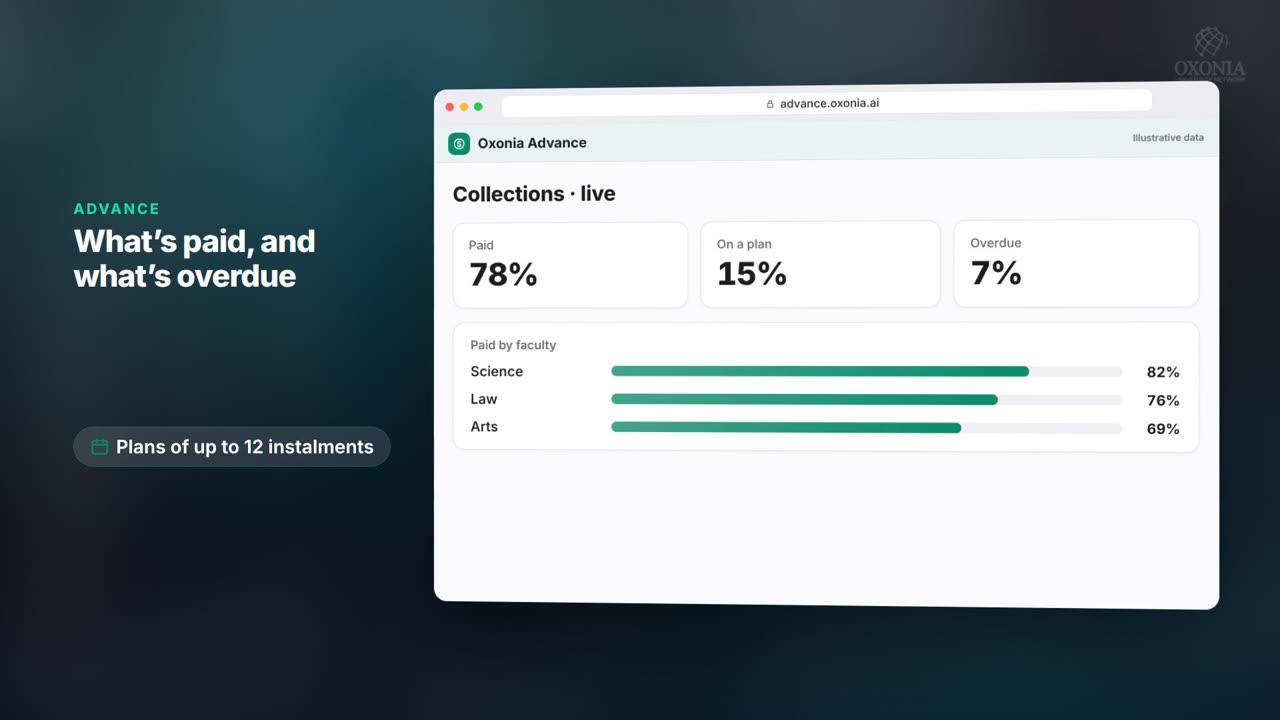
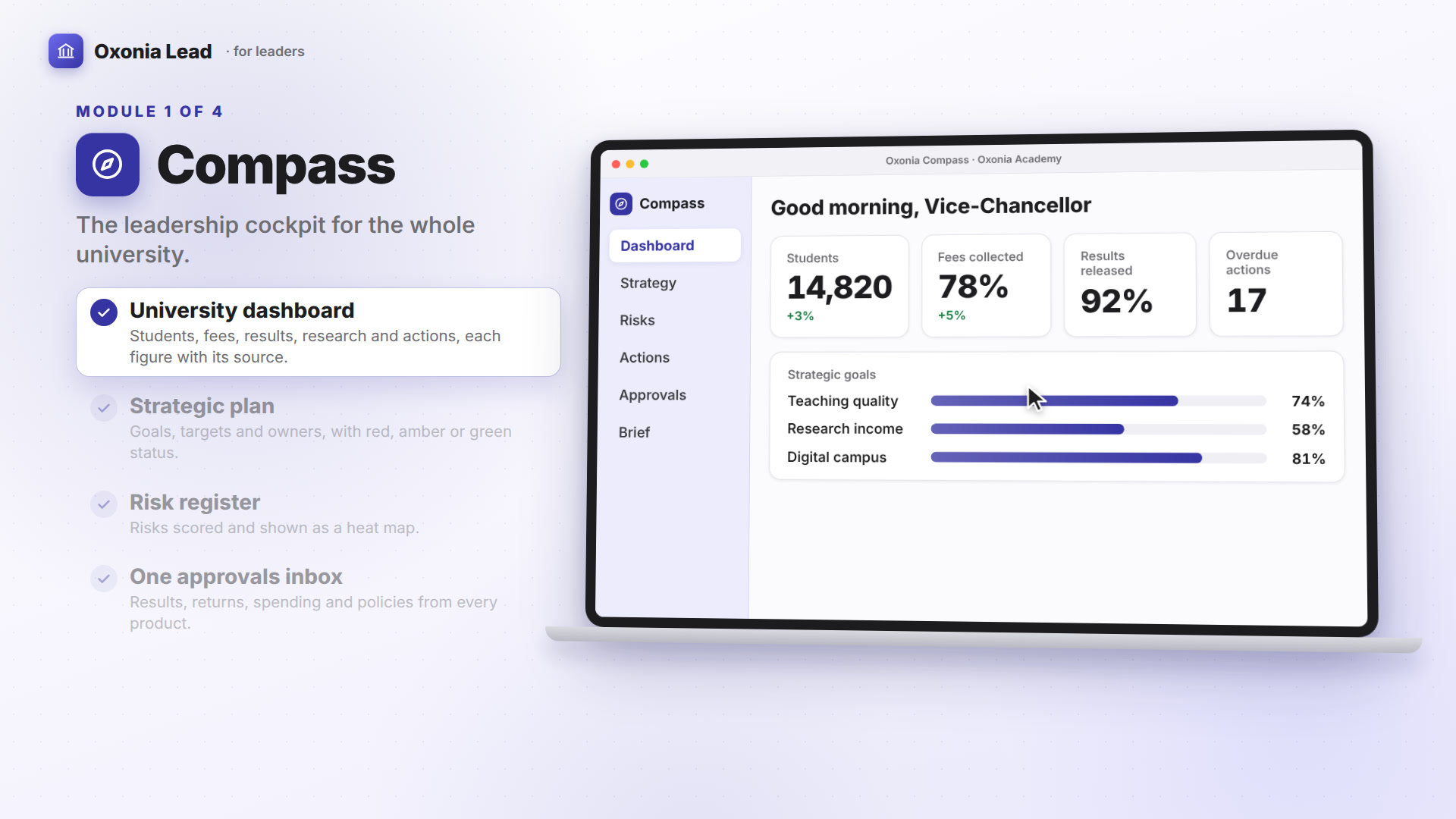
The Bursar sees a live view of what has been billed, what has been collected, the collection rate, and how many students are on plans or overdue. The same figures feed the fees group in Compass, so the Vice-Chancellor and the Bursar look at one set of numbers.
A sensible start is one faculty or one year group. Import its fee accounts and bills, link guardians and sponsors, switch on the weekly reminders and connect the university's Paystack account. Compare the term's collection with the one before.
For the wider picture, read student fees, scholarships and alumni in one system and the student fees app.
Most bursaries see the effect first in fewer disputed balances and fewer students blocked by mistake. Collection follows as families see clear plans and reminders arrive with the person who pays.
Products in this article
Questions people ask
How many instalments can a payment plan have?
Between one and twelve, monthly or every few months, starting on a date the bursary chooses.
Who receives fee reminders?
The student and every guardian and sponsor linked to the account, by email. Overdue accounts are reminded every Monday, at most once a week.
Where does card money go?
Through the university's own Paystack account. The receipt number is issued as soon as the payment is confirmed and the receipt is emailed.
Can families still pay by bank transfer?
Yes. The transfer is recorded in Wallet and confirmed by the bursary.
Leaflets


More videos
 1:11Conference film · Chapter 5Operate: records, Advance and Wallet
 1:40Suite filmOxonia Lead in 100 seconds
 1:54Conference film · Chapter 4Lead: Senate, Compass, Office, Policy, Library
Keep reading
Related articles
Oxonia Operate →
For the Registry, Admissions, Finance, Student Services and departmental administrators: meetings, approvals and memos automated, applications screened against your criteria, and answers for students and staff at any hour.