Suite guide
Oxonia Operate: Registry, Bursary and Admin in One Place
The people who run a university's offices hold it together. Oxonia Operate gives them one platform instead of a drawer full of forms.
Who Oxonia Operate is for
Oxonia Operate is the suite for the university's professional services: the registry, the exams office, the bursary, faculty officers, secretaries and HR. These teams handle the records, money, exams and paperwork that keep teaching and research running.
Their work is often split across many tools and many paper files. A faculty officer might use one system for student records, another for exams, a spreadsheet for room bookings and email for everything else. Information is copied by hand between them, and mistakes creep in.
Oxonia Operate brings this work onto one platform with one Oxonia Academy ID. It includes Office and Advance, plus the exams-office tools from Mark and the staff records in Nexus.
Each team sees what its role needs, and data flows between them without copying.
This matters to students as much as staff. When the registry, the bursary and the exams office share records, a student with a question gets one answer rather than being sent from office to office. A change made in one place, such as a new address or a payment plan, is seen everywhere it needs to be.
| Team | Main tools |
|---|---|
| Registry | Office approvals and correspondence, Nexus records |
| Exams office | Mark exams-office tools |
| Bursary | Advance fees, payment plans, hardship |
| Faculty officers | Office tasks, approvals, memos |
| Secretaries | Office meetings, correspondence, directory |
| HR | Nexus verified records, Office delegations and leave |
Office: everyday administration
Office records everyday meetings and prepares summaries with decisions and actions. Tasks come with reminders and escalation. Approvals and workflows cover leave, purchases, travel and room booking, with delegations when people are away.
Memos and circulars go out with read receipts. The correspondence register tracks every letter in and out. The staff directory and org chart show who does what.
For secretaries and faculty officers, Office replaces the paper forms, the trays of letters and the notebook of follow-ups. For managers, it shows where work is stuck.
Office summaries are Ai enabled drafts that a person adopts before they become the record.
Room booking is a good example. Staff request a room in Office, the request follows the booking rules, and the room appears as booked for everyone. Clashes are visible before they happen, and nobody needs to keep a paper diary at the front desk.
Advance: fees and alumni
Advance runs fees, payment plans, receipts, scholarships and hardship support. It matches students at risk of leaving over fees with support they may be eligible for. Students, guardians and sponsors use Wallet to see balances and pay.
Advance also handles alumni: alumni records with contact consent, fundraising campaigns and the gifts they bring in. The bursary and alumni office work from the same system.
Card payments go through the university's own Paystack account, with the receipt issued at once. Bank transfer, cash and mobile money payments are confirmed by the Bursar before the receipt is issued.
For the bursary, the biggest change is usually fewer queues. Students and guardians check balances and download receipts themselves, so staff can focus on payment plans and hardship cases where they can make a real difference.
Exams office tools from Mark
The exams office gets Mark's administrative tools. These cover scanning and collecting scripts, tracking marking progress, moderation, appeals, the results broadsheet, the Senate results pack and item analysis.
Examiners mark in Mark through Oxonia Teach. The exams office manages the process around them. Every script is approved by a named examiner, and the exams office can see which papers are complete and which need a push.
Read our guide to exam marking at scale for a step-by-step plan.
Exams officers can track each paper from rubric to broadsheet. If one paper falls behind, they can see it early and move help to it. Task reminders from Office can chase late steps automatically.
Nexus: records for HR and registry
Nexus keeps verified staff records. HR and registry staff manage the verification queue, checking qualifications against evidence. These records feed regulator returns and accreditation work in Oxonia Lead.
Keeping records current day to day means returns are ready when they are needed, instead of being rebuilt each year.
HR also uses Office for leave, delegations and the org chart. When someone joins, their Oxonia Academy ID, directory entry and staff record are set up together. When they leave, access ends across every product at once.
How the suite works together
The value comes from shared records. A leave approval in Office updates the directory. A student's fees status in Advance is visible to the faculty officer who needs it. Exam results from Mark feed the Senate results pack. Staff records in Nexus support the org chart in Office.
- One login for every team
- Approvals and delegations across products
- Roles control what each person sees
- People approve anything that becomes an official record
- Interfaces in English, French, Portuguese and Arabic
Leaders see figures from all of these in Compass, including fee collection, overdue tasks and marking progress.
The university admin console lets administrators manage users, roles, workflows and delegations for the whole suite from one place. When the university adds another suite later, the same users and roles carry across.
Price and how to start
The Operate package costs £34,400 a year for a university with 5,000 to 15,000 students. That is 20% off buying Office and Advance separately. Three-year contracts take a further 10% off. Oxonia Complete includes every suite at 30% off.
Office has a Department plan at £4,800 a year, which suits a single faculty office. See our package guide or pricing.
Many universities start with a single faculty office on Office, or with the bursary on Advance at the start of a new academic year. Both are natural starting points because the benefit is quick to see.
Universities in Nigeria pay 35% of the UK price, billed in naira, and a yearly plan costs the same as 10 months.
Products in this article
Questions people ask
What is in Oxonia Operate?
Oxonia Operate includes Office and Advance, plus Mark's exams-office tools and Nexus staff records.
How much does Oxonia Operate cost?
For a university with 5,000 to 15,000 students, the Operate package costs £34,400 a year.
Who is Oxonia Operate for?
Registry, exams office, bursary, faculty officers, secretaries and HR.
Leaflets


More videos
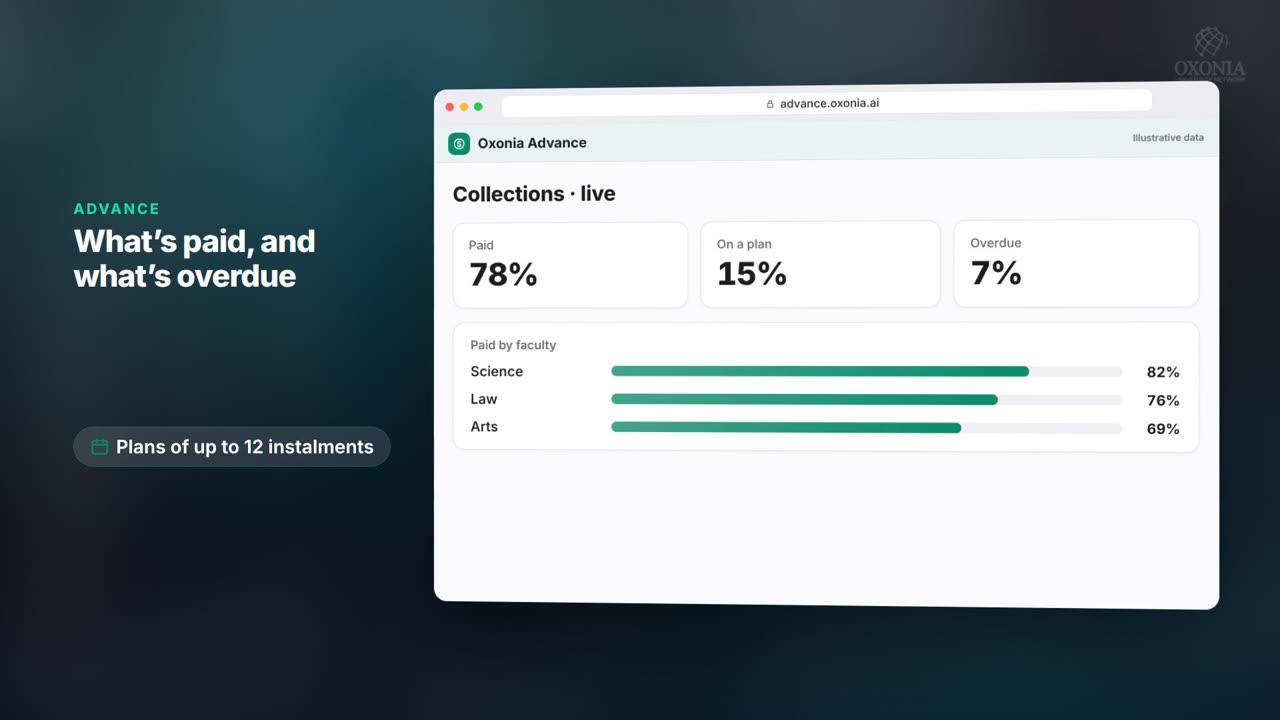 1:11Conference film · Chapter 5Operate: records, Advance and Wallet
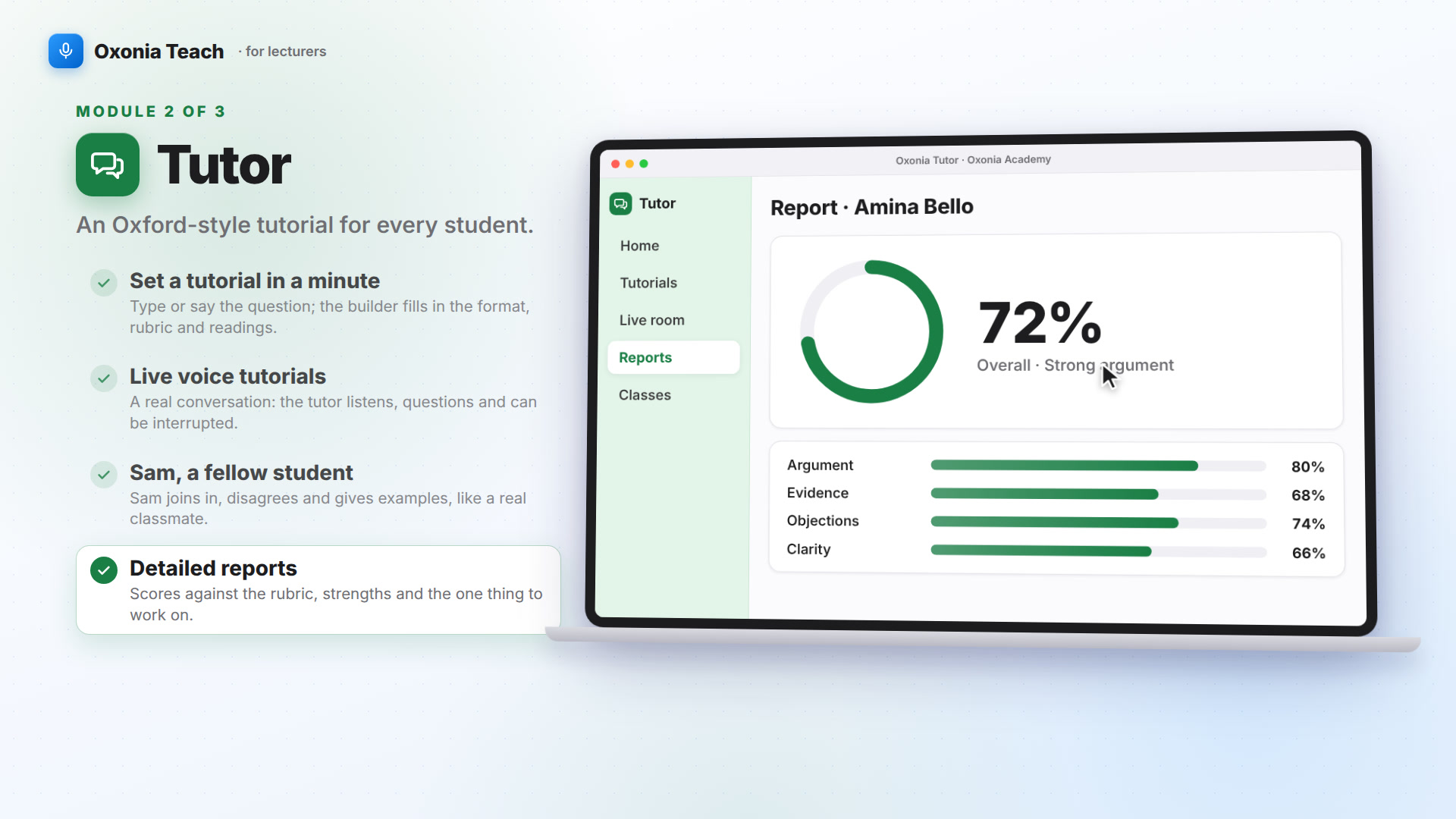 1:39Suite filmOxonia Teach in 100 seconds
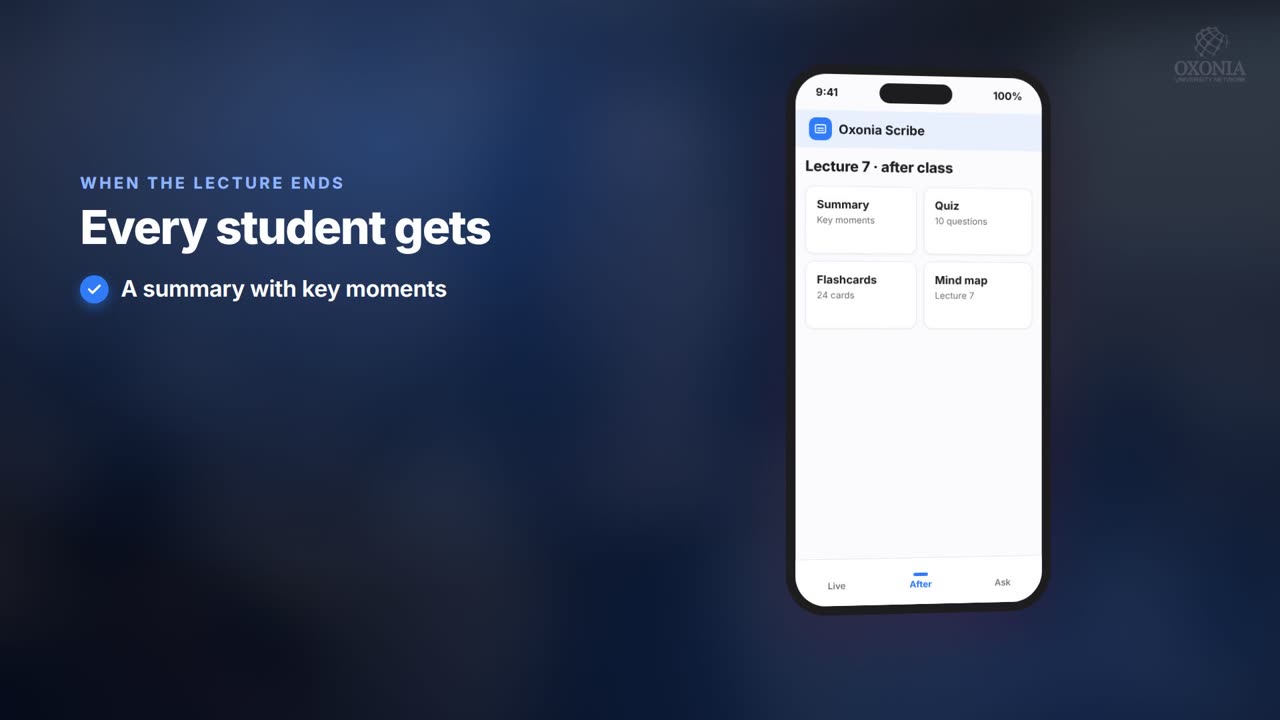 1:19Conference film · Chapter 6Teach: Scribe and Tutor
Keep reading
Related articles
Oxonia Operate →
For the Registry, Admissions, Finance, Student Services and departmental administrators: meetings, approvals and memos automated, applications screened against your criteria, and answers for students and staff at any hour.